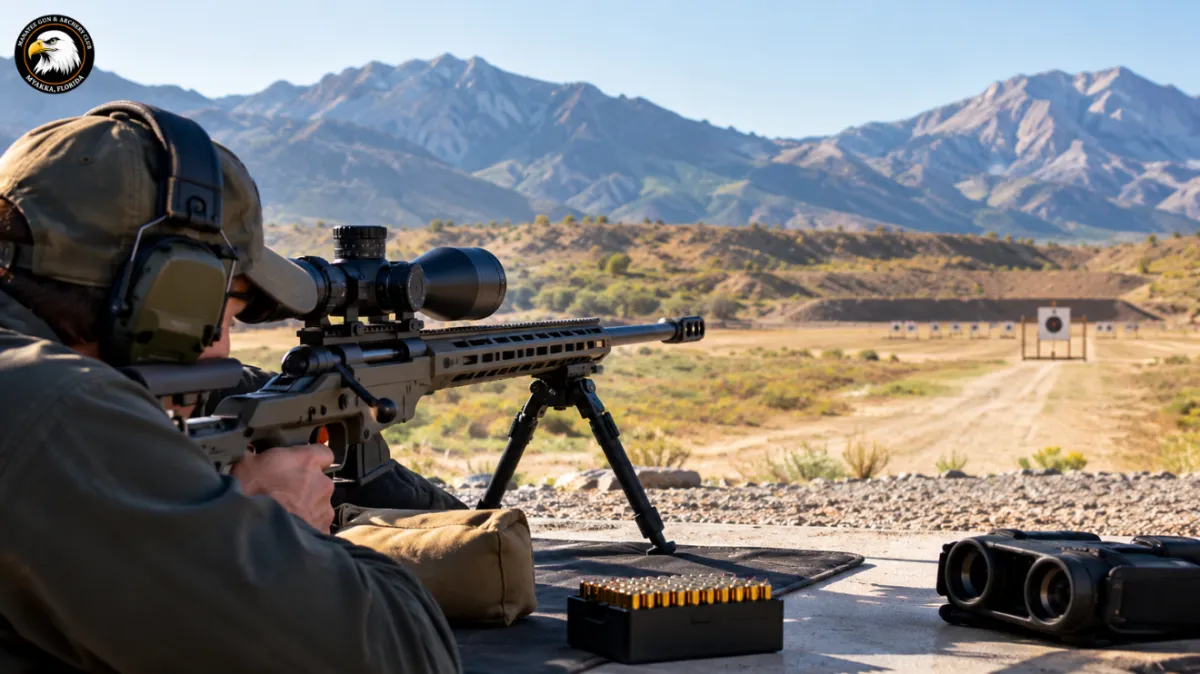
Tips for Improving Accuracy at a 1000 Yard Gun Range
Almost every long-range shooter has a moment. You set up what feels like the perfect shot, pull the trigger, and then watch the impact land in a place you never expected. It can be frustrating, but it’s also part of what makes shooting at a 1000-yard gun range so rewarding. Every successful hit is the result of preparation, patience, and small improvements that add up overtime.
The fact is, hitting well at longer ranges is not a matter of luck. It’s knowing your gear. It’s about developing habits. And it’s about knowing how the environment plays in every shot. Whether you're new to a 1000-yard range, or you're looking to tighten your groups, these practical tips can help.
Choose the Right Rifle and Optic for 1000 Yard Shooting
One of the biggest mistakes people make is assuming any rifle can comfortably reach long distances. Technically, many can. Consistently hitting a target at 1,000 yards is another story.
Your rifle should be capable of producing reliable, repeatable accuracy, and your optic needs enough magnification and adjustment to match the distance. Clear glass, dependable turrets, and a properly mounted scope all make a noticeable difference. Most people don't realize that even the best equipment still needs to be correctly zeroed before attempting long-range shots. Spending time confirming your setup at shorter distances often saves countless missed shots later.
Master Your Shooting Position and Trigger Control
It's easy to assume expensive gear is the answer. Your shooting fundamentals matter just as much. A stable shooting position reduces extraneous movement and helps each shot break consistently. Watch your body position and your breathing, and use the same cheek weld each time you get behind the rifle.
The other thing that gets equal attention is trigger control. The difference between a frustrating miss and an accurate shot is often the slow, smooth press that does not disturb the sight picture.Small habits make a big difference, especially on a 1000-yard shooting range, where tiny errors become much larger downrange.
Understanding Wind, Elevation, and Bullet Drop Adjustments
At shorter distances, minor environmental changes might not seem important. At 1,000 yards, they can completely change where your bullet lands. Learning to read wind direction and speed is one of the most valuable skills a long-range shooter can develop. Even a light crosswind may push a bullet several inches or more off target.
You'll also need to understand:
●Bullet drop over extended distances
●Elevation adjustments for your optic
●Windage corrections based on changing conditions
●How temperature and altitude can influence performance
What surprises many people is that experienced shooters are constantly making small adjustments. They rarely use the same settings from one session to the next.
Qualify for the 1000 Yard Range Before You Shoot
Many shooting facilities require shooters to demonstrate proficiency before using a 1000 yd range. That requirement isn't there to make things difficult. It's there to promote safety and ensure everyone on the range understands long-distance shooting fundamentals. Qualification usually involves proving you can consistently hit targets at close range, that you know what the commands to “load”, “unload” and “cease fire” mean, and that you can safely handle your weapon. That’s why it’s always worth doing intermediate-distance practice first. If you hit confidence at 100, 300 or 600 yards, you have a much better foundation to build on before you go all the way to 1,000 yards.
Use Steel Targets and Bench Rest Setups to Improve Accuracy
Steel targets allow you to shoot and quickly change your shot without having to walk downrange repeatedly to get instant confirmation on when you hit the target. Many shooters find these assists in preserving rhythm and concentration during practice. A good bench rest setup will also eliminate unnecessary movement as you work on technique.Once your fundamentals become consistent, transitioning to other supported shooting positions becomes much easier. Keep in mind that a bench helps diagnose shooting errors, but real improvement still comes from practicing sound fundamentals rather than relying entirely on support equipment.
Practice Consistently at Different Distances Before Reaching 1000 Yards
Long-range accuracy isn't built in one afternoon. The shooters who perform well at a 1000-yard gun range usually spend plenty of time practicing at multiple distances. Each range teaches something different about bullet behavior, optic adjustments, and personal shooting technique.
Through a step-by-step process, you can:
●Get comfortable with your equipment
●Check ballistic data before increasing distance
●Enhance consistency under different weather conditions
●Enhance your wind reading skills
Those shorter practice sessions, over time, build the confidence you need to make accurate shots at 1,000 yards.
Conclusion
Being better at a 1000-yard gun range is more about patience, preparation, and repetition. Reliable equipment helps, of course, but solid fundamentals, knowledge of the environment, and consistent practice are what really make the difference. Each session offers new learning opportunities, and with experience, those lessons will develop into confident, repeatable long-range shots.
FAQs
Q1. What equipment do I need to shoot accurately at a 1000-yard gun range?
A capable precision rifle, quality optic with sufficient elevation adjustment, stable shooting support, appropriate ammunition, and basic ballistic knowledge are the essentials. Reliable equipment paired with proper technique produces the best results.
Q2. Do I need prior long-range shooting experience to use a 1000 yard range?
Many facilities require shooters to qualify before accessing a 1000-yard range. Even if it's not required, gaining experience at shorter distances first helps build the skills needed for safe and consistent long-range shooting.
Q3. How can I improve my accuracy and consistency during long-range shooting practice?
Focus on consistent shooting fundamentals, practice trigger control, learn to read wind conditions, verify your optic adjustments, and spend time training at multiple distances before regularly shooting at 1,000 yards.
